Pages

Wednesday, July 31, 2013

Mega Management: Turning in Homework

Welcome back for more Mega Management.

If you missed the first two posts in this series you can check them out here:


Today we're looking at turning in homework. Keep in mind that what you actually assign for homework is a whole post in itself. This is just the procedure part for collecting it. 

There is one bin for homework. Any kind of bin will do. Fancy ones, plain ones, wire ones, plastic ones, stacking ones, see through ones...well, you get the point. 

Semikolon Paper Tray - See Jane Work - Photo


Last year I had a bin for every subject so kids could turn in papers as they finish their work, but now looking back it seems a little unnecessary. Here's why I like one bin over one bin for every subject. First, it takes up less counter space and second, it is just overwhelming to me to look at all those trays full of paper! Call me crazy, but it does...

Once homework is turned in, students cross their name off the list.  I haven't decided the fine details of how the list will look yet, but it will either be a laminated class list that is always on top of the stack of homework or it will be a cutie-patootie frame that they can Expo marker their name out with, OR {last "or" I promise} it will be some sort of clip type system. Stay tuned for that. 

I keep a clipboard with a check in sheet on it to keep track of homework and other assignments that I use to account for a Work and Study Habits grade. Here's a version of what that looks like. I always seem to tweak it a little bit here and there each year. 


So what do I do with all those papers kids have to turn in? Stay tuned for more Mega Management ;0) How's that for a cliffhanger...say what!!! {Wow, I don't think I've ever said that in real life, but it's pretty safe to say that your imaginary version of me saying it is probably way cooler than the real me saying it...}

For more on homework, check out Christina from Bunting, Books, and Bainbridge. She has some cute ideas for a homework club that you can see here. 


When it comes to what to assign for homework, I like Stephanie's post at 3rd Grade Thoughts on a Universal Homework Model. 

Monday, July 29, 2013

Monday Made It- Ruffle Bags

Today I'm linking up with Tara at Fourth Grade Frolics for another Monday Made It. 
 
Wahooo, that's two in a row. Unfortunately, this is related to school 0%. But, I was so proud I just had to share. 

My dear friend has the cutest twins who just turned 6 and I made them these ruffle bags. Matching, but not matchy-matchy if you know what I mean :)


They're the same size, the picture on the left is just closer up. The one on the left is the one I did first. I definitely had to work out some kinks when I made that one. The one on the right was much quicker and a tad straighter. Good thing little girls don't notice stuff like that!

Here's a link to the Pin that inspired this fun little project. 

And here's why I was not able to get anything school related (or otherwise) all week long...well except for my sewing project which took me about one long ol' nap time to complete: 


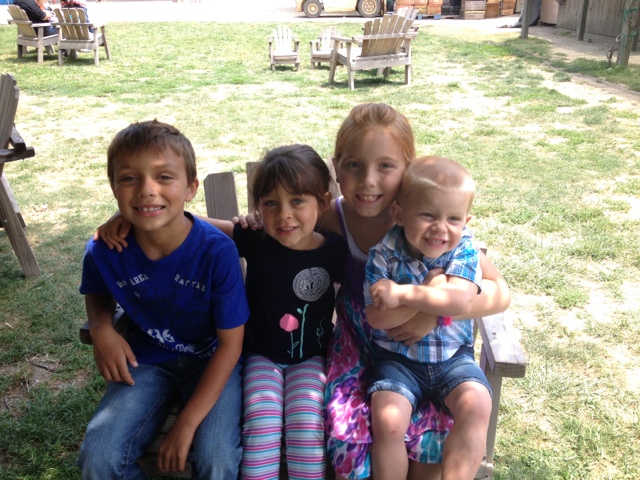
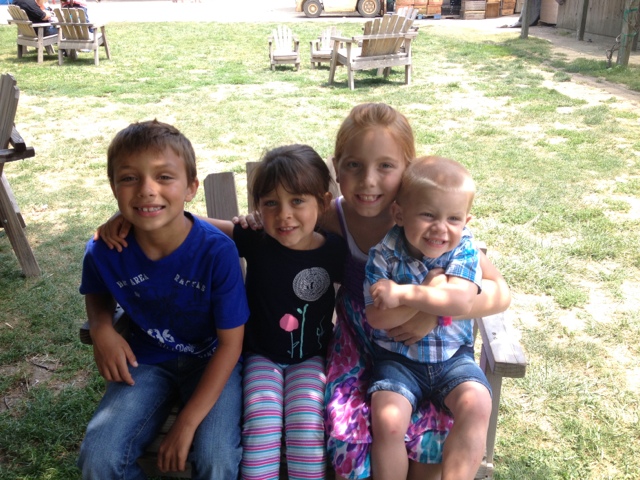
My niece and nephew (the two on the right) came to visit for the week. So it was me all day by myself with a 10, 7, 4, and 3 year old. Oh. My. Word. And that's all I have to say about that. 

And after the first poopy diaper {yuck!} I had the brilliant idea to potty train my nephew. Good thing he was totally ready for it and it was the easiest potty training ever!
 
 
 Doesn't he look so happy! 

Now run along and check out all of the other amazing link ups for this week's Monday Made It. 

And don't forget to come back for the next post in my Mega Management series. 

Sunday, July 28, 2013

Mega Management: Entering the Classroom

Oh yah! Time to get to the nitty gritty of...


Am I serious you ask? Do I really need a plan for how students are to enter the classroom? Umm, yes! If little Johnny doesn't know what you expect him to do here's what he's going to do: speed through the door pushing everyone out of his way, forget to mark his lunch choice, throw his backpack in the closet, he'll probably leave his homework in there, and if he remembered to grab out his lunch box he'll throw it in the general direction of the lunch cart and proceed to bother everyone else while they're trying to enter and get unpacked. Don't you just love sweet little Johnny...

Mischievous
This little darling is not Johnny, nor I have I ever taught a mischievous little Johnny before....I HAVE taught a mischievous little ....well, I better not say ;o)
At the beginning of the year we practice doing this routing quietly, quickly, and safely. 


When students enter the class they'll move their number to the “Hot Lunch” or “Cold Lunch” column on the pocket chart. Last year I used these as magnets just to track attendance, but they kept getting flung off the file cabinet and that mischievous "Johnny" was always hiding his under the headers. Maybe the pocket chart will work better this year. We'll see. 


Backpacks are unpacked and put into the appropriate shelves in the closet.We have tiny rooms at our school so it's worth saving the cabinet space to have these things out of the way. Kids put them in cubbies last year, but the ones I have are gigantic and take up so much space!


Snacks are put in the snack bin and water bottles will go in the hydration station according to their class number. Kids have snack at morning recess, not in the class. It makes recess line up time easier if snacks are out of backpacks and ready to go. I cannot stand water bottles at desks, but I know it's important for students to stay hydrated throughout the day.

I got this idea from Multiage Moments last summer. Honestly I still haven't decided if I want to take up the counter space next to the sink, but it's not like I really use it for anything else. Once I put a stack of papers there and by the end of the day they were all splattered with water from kids washing their hands.

http://media-cache-ak3.pinimg.com/originals/22/21/1b/22211b78987f8c9ce40361d7682ab1d3.jpgI saw this "image only" on Pinterest and that seems like a clever idea. Yep, that's a water bottle holder for bicycles! They're at least 4 bucks each on Amazon...maybe cheaper at Walmart or something. I don't know if I'd do $4 each for those.

Lunches go on the lunch cart. Only 3 people are allowed in the lunch cart area at a time. Others must wait behind the duct-taped line. Seems a little neurotic, but the lunch cart is in a small corner of the room blocked in my those gigantic cubbies, and it's a major traffic jam if the cold lunchers storm the cart all at once.

Two pencils should be sharpened for the day. Ugh! I hate the pencil sharpener. The last two years our school requested that students bring mechanical pencils in 3rd grade and I hate that even worse. They need to sharpen first thing so I can get that nightmare out of the way. Throughout the day they can get a pencil from the "sharp" cup. Dull and broken pencils are put in another cup. 

All of these things should happen in the first few minutes or so that students are in the class. Whew!


Saturday, July 27, 2013

Mega Management: Series Kickoff

I'm kicking off a series of posts focused on classroom management...an area where MEGA planning is required. Since school is fast approaching, this series will post frequently so I have time to cover it all. Fasten your seat belts and hold on folks, it's time for....


So why all the focus on classroom management? Well, I remember being in college and having to type up a 1-2 page classroom management plan. The directions were vague and included things like how you would arrange desks, how you would collect and return papers, where would you store materials and how would students access those materials, etc. The paper was hard to write when I was considering an imaginary classroom with an imaginary group of students. 

woman with thought bubble on chalk board
Photograph: Tara Moore/Getty Images
It was during my student teaching that I realized that my 1-2 page little paper wasn't even scratching the surface of what I had to plan for to make my class run smoothly.
 
As I was thrown into my first year of teaching under really extreme circumstances mid year, I realized I was more disillusioned than I thought. I didn't have time to put a lot of thought into classroom management. Sounds crazy right? And like horrible teaching right? Well, consider this: I got my curriculum books on a Sunday night and I started in the class at 8:30 the next morning! I just had to make a quick decision and get things going.

The next year wasn't a ton better as far as time to plan. I was at a new school in a new state and was hired with only 5 days to prepare! Again, I had to just get a plan together and go with it, and as the year progressed I knew a lot of things were falling through the cracks. 

http://danielleabisaab.blog.com/files/2012/05/messy-desk.jpegThis last year was a bit better, but again, some things were just not running as smoothly as I knew they could. And even worse, there were some things that I hadn't really thought about at all. I had no plan for certain circumstances that would occur in class and that led to confusion and disorder. 

See that lady drowning in papers? Yah, that is how I felt at the end of oh so many days!

When it comes to classroom management we all know that what works really well for one group might not work so great for the next. On the other hand there are some parts of a classroom management plan that stick around from year to year. 

So this summer I have spent a lot of time thinking about all those things that I've done successfully, things that I would like to implement, and things that I'm going to keep in my arsenal of tools to implement for those "special" students, parents, and circumstances. 

See you next time with my first topic:

Friday, July 26, 2013

Building Mathematical Comprehension- Chapter 9


Second to last post of this book study. Crazy!! Catch up on my old posts by going here:


Chapter 9-  
Monitoring Mathematical Comprehension

The good news: Many students take part in this mostly subconscious act of self monitoring meaning as they read and do math. 

The bad news: Not ALL students are able to do this on their own.  In fact, in the beginning of the chapter Sammons says that so many children don't expect to understand math. (249) If I don't expect myself to be able to understand, then I'm not going to have much motivation to persevere when it gets hard. It's easy to give up when the expectation isn't there. This really speaks to the importance of building a safe learning environment in our classrooms and having high expectations for ALL students!

This great anchor chart from First Grade Brain Sprinkles can easily be adapted for math.  


The great thing is that this strategy of metacognition encompasses all the other strategies!

Metacognition in math, however, is twofold. First, students must monitor their conceptual understanding (252). Then, students must monitor their understanding of the meaning of the problem (254). Many math students are so engrossed in procedural understanding that conceptual understanding suffers, thus problem solving suffers.

Here's what students need to know about monitoring mathematical comprehension:

1. They are responsible for their own understanding. Students must be aware of times when they don't understand. 

2. Students need to know when they don't understand. 

3. They can pinpoint their misunderstanding. In other words, students know what got them confused in the first place. 

4. Students can use strategies to fix their comprehension. 

5. Strategies should be used flexibly. When one doesn't work, student know to reevaluate and try something new. 

Concrete Example: When a car breaks down, we don't try to keep driving it. We fix it! When our comprehension breaks down, we don't keep working, we stop and fix our comprehension first. (258)

Red Flags Students Should Watch For:
  • My internal voice isn't working 
  • I can't visualize the problem
  • My mind is wandering and I can't focus
  • I can't recall the details
  • When I ask questions to clarify, I can't come up with an answer (259)
Here are some great thinking stems to assist with metacognition. 

http://media-cache-ak0.pinimg.com/originals/c5/26/9b/c5269bdebdf9ffe60546de8a182e9ca8.jpg
no source for the above Pinterest pin :(

Red Flags Teachers Should Watch For:
  • Students who rush through their work
  • Students who don't make mathematical connections
  • Students who give up easily (260)
Strategies for Monitoring Mathematical Comprehension

Huh?
Have students put a post it with the word "huh" written on it next to the confusing part of the text. If the confusion is cleared up they add a light bulb. The teacher can walk around and see what areas of the text/work should be addressed. (263) 

Ticket Out the Door
This strategy requires students to solve a problem, rate their understanding, or show their understanding in some other way before leaving the class. The teacher then uses that formative assessment when planning the next day's lesson. (264)

 
(Ticket Out The Door poster from Teach-A-Roo)


Color-Code Math Stretch
Similar to the Ticket Out the Door, students rate their understanding of the day's lesson on color coded sticky notes. Green if they understood it well, yellow for moderate understanding, and orange for very confused. On the note students write a quick statement about the concept. (266)

Here's a bit of a spin on this math stretch from Timeouts and Tootsie Rolls.  


So, so, so much to take in. After giving your brain a little break you can check out these other links too!